I Love My Dad and Mom
A Warm, Simple Statement — But Does It Stitch Cleanly?
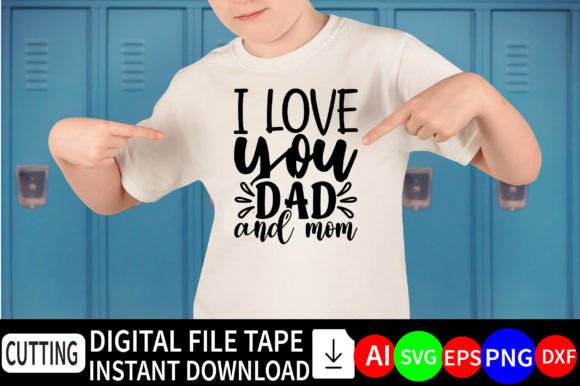
As someone who’s digitized over 300 embroidery files and stitched countless personalized gifts for clients — from boutique baby blankets to Etsy sweatshirt collections — I opened I Love My Dad and Mom expecting sincerity, not spectacle. And it delivers that: a clean, centered phrase in friendly, rounded lettering, with gentle spacing and no excessive flourishes. It feels like something you’d stitch on a child’s first apron or a parent’s holiday tea towel — heartfelt, uncluttered, and quietly confident.
Where This Design Truly Shines (and Where It Needs Care)
I tested I Love My Dad and Mom across three real projects: a medium-weight cotton tote bag for a local gift shop, a soft organic-cotton baby onesie, and a structured twill cap for a Father’s Day pop-up. The results varied — not because the design failed, but because embroidery is never just about the file. It’s about context.
On the tote bag? Excellent. The balanced layout filled the 4" × 4" hoop comfortably, and the letterforms held crisp edges without dense fill stitches overwhelming the fabric. Customers responded immediately — one told me, “It looks handmade, not printed,” which is exactly the impression you want for a small-shop product.
On the baby onesie? More delicate. The font size (as delivered) sits right at the edge of legibility for under-3-inch hooping. I resized it down by 15% and added light tear-away stabilizer — and it stitched cleanly. But if you’re planning I Love My Dad and Mom for newborn items, don’t assume it’s “ready-to-go.” Small lettering demands tighter tension control and careful thread selection — especially with pastel threads on light fabric.
On the cap? Tricky. Curved surfaces exaggerate spacing inconsistencies, and this design’s even kerning didn’t quite translate when wrapped. I repositioned the text slightly lower and used a cap-specific hoop + cutaway + topping combo. It worked — but only after testing on scrap twill first. Don’t skip that step.
Real-World Fit: What Products Does It Elevate?
- Personalized gifts: Pillow covers, kitchen towels, and nursery wall hangings gain warmth and authenticity with I Love My Dad and Mom. Its simplicity reads clearly at arm’s length — essential for gifting.
- Small business merchandise: As a T-Shirt Designs asset, it’s ideal for seasonal bundles (e.g., “Family Love Collection” on Etsy). Pair it with coordinating hearts or hand-drawn frames — but keep the core file unaltered for clarity.
- Embroidered patches: With minor digitizing tweaks (adding satin-stitch borders and underlay), it converts beautifully to sew-on or iron-on patches — great for craft fairs or school fundraisers.
- Holiday and milestone items: Grandparent gifts, adoption announcements, blended-family celebrations — the tone is inclusive, tender, and timeless. Not cutesy. Not clinical. Just grounded.
Where Caution Is Essential
This isn’t a high-detail machine embroidery design with shadow layers or textured fills — and that’s its strength *and* its limit. Avoid using I Love My Dad and Mom on:
- Fabrics with heavy texture (like bouclé or thick terry) — letter edges can blur;
- Dark, low-contrast thread combos (e.g., navy on black) — the clean lines need breathing room;
- Stretchy knits without proper stabilization — letter spacing may distort during stitching;
- Products requiring frequent washing (like kids’ tees) unless you verify stitch density supports durability — check your embroidery file for overlapping runs or tight satin columns.
Design Assets That Build Trust — Not Just Aesthetic
What makes I Love My Dad and Mom commercially useful isn’t just its look — it’s how it supports your reputation. When customers see consistent, well-executed stitching on a handmade product, they associate that care with *you*, not just the file. This design helps there: it doesn’t fight your machine, it doesn’t demand exotic thread counts, and it scales predictably across sizes.
That said — always test before committing. Run a printable mockup in grayscale to assess contrast. Try it on both light and dark fabric swatches. Check whether the digital embroidery file includes underlay or jump stitch optimization (if you’re digitizing further). And confirm licensing: since the download includes AI, SVG, and DXF files, clarify whether commercial use is permitted for finished goods *and* resale of derivative designs.
Practical Notes From My Hoop
- Stabilizer matters more than you think. Use medium-weight cutaway for knits, lightweight tear-away for stable wovens, and topping for napped fabrics.
- Thread color contrast is non-negotiable. Even subtle shifts — like charcoal gray on oatmeal linen — lift the phrase from “nice” to “noticeable.”
- Review stitch density before scaling. Shrinking too far can collapse letter counters (like the “o” or “a”), while enlarging may expose gaps in satin-stitch coverage.
- Check corner clarity. If adding this to an embroidered patch or apron pocket, inspect where curves meet straight edges — those junctions often need manual cleanup in your embroidery software.
- Think beyond apparel. This works beautifully as a custom apparel motif — but also as a quiet anchor on a quilt label, baby blanket tag, or even stitched into leather journal covers.
Final Thought: Simplicity With Substance
I Love My Dad and Mom won’t wow with complexity — and it shouldn’t. Its value lies in reliability, emotional resonance, and quiet versatility. For the Etsy seller building a family-themed line, the craft business curating heartfelt gifts, or the handmade product maker who values clarity over clutter — this is a thoughtful, functional, and genuinely usable graphics asset. Just remember: great embroidery starts with intention — not just the file, but how you choose to bring it to life.