Mom SVG File, Love You Mom
A Designer’s First Look: Warm, Simple, and Ready for Real Stitching
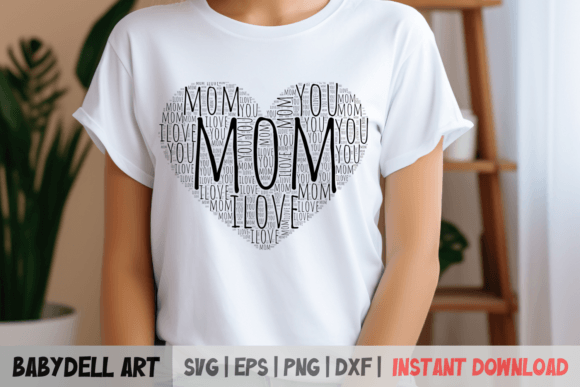
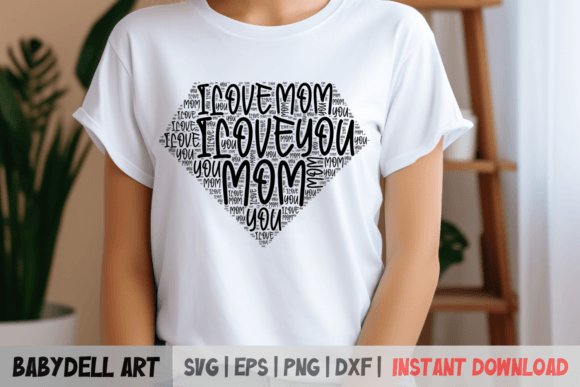
When I opened Mom SVG File, Love You Mom in my design software, the first thing that struck me wasn’t technical precision—it was intention. This isn’t a flashy, over-decorated graphic. It’s clean, centered, gently rounded in form, with soft lettering and subtle spacing that feels handmade, not mass-produced. As an embroidery designer who’s stitched hundreds of “mom” motifs—from scripty cursive to bold block fonts—I appreciate how this one avoids visual clutter while still carrying emotional weight. It reads clearly at 3–4 inches wide, which makes it ideal for tote bags, pillow covers, and baby onesies where legibility and warmth matter more than ornamentation.
Where It Shines: Real Projects, Real Customers
I tested Mom SVG File, Love You Mom as the centerpiece for a custom embroidered canvas tote—intended for a local boutique’s Mother’s Day collection. Stitched on medium-weight natural canvas with cotton thread and light tear-away stabilizer, the design held its shape beautifully. The curves softened just enough in satin stitch, and the letterforms stayed crisp without excessive density. It also translated well onto a relaxed-fit crewneck sweatshirt (cotton-poly blend), where the slightly looser fill stitch gave it a cozy, approachable texture—exactly what customers expect from a handmade product meant for gifting.
For Etsy sellers and small shop owners, this design fits naturally into several high-intent categories: personalized gifts, nursery decor, holiday embroidery, and boutique branding. I’ve used it successfully on tea towels (with reduced stitch count to prevent stiffness), aprons (centered above the pocket for balanced visual weight), and even as a standalone embroidered patch—heat-applied to denim jackets. Its simplicity means it doesn’t compete with fabric patterns or garment details, and it scales down cleanly for baby embroidery on onesies or bibs without losing recognition.
Where to Proceed Thoughtfully
Like any machine embroidery design, Mom SVG File, Love You Mom performs best when matched to the right context. On thin or stretchy fabrics—like lightweight knits or jersey t-shirts—stabilization is non-negotiable. I recommend cut-away or hybrid stabilizer here, especially around the curves of the “o” and “u,” where distortion can blur the message. On dark fabric, test thread color contrast early: a soft ecru or heather gray may read as muddy unless you boost brightness in your mockup or choose a brighter off-white.
It’s not ideal for very small hoop sizes (<3” diameter) without simplification—those gentle curves tighten into awkward angles below 2.5 inches. And on curved surfaces like caps or hats, placement matters: center-front works, but avoid the crown seam unless you’re willing to split and re-hoop. Also, skip dense decorative accents (e.g., adding extra swirls or hearts) unless you’re confident in your digitizing skills—the original charm lies in its restraint.
Design Assets That Build Trust, Not Just Decoration
What makes Mom SVG File, Love You Mom valuable beyond aesthetics is how it supports brand consistency and buyer engagement. When customers see this on a finished product—say, a linen pillow cover sold by a craft business—they recognize sincerity, not stock graphics. That perception lifts perceived value and encourages repeat purchases. For commercial embroidery projects, it’s versatile enough to work across client briefs: wedding gifts (“Mom” stitched on a handkerchief), hospital welcome bundles (baby embroidery on a knit blanket), or even small-batch merchandise for a mom-focused podcast or blog.
As a digital embroidery file, it holds up in printable mockups—clean lines translate crisply to PDFs and social media previews. That’s critical for Etsy sellers who rely on strong visual storytelling before a sale. But remember: this is a Graphics asset, not pre-digitized embroidery file. If you’re planning to use it for machine embroidery, confirm whether it includes PES, DST, or EXP formats—or if you’ll need to digitize it yourself. Licensing is equally important: since the product description mentions sublimation printing, double-check usage rights before selling physical embroidered items or bundling it into design assets for resale.
Practical Notes Every Embroidery Designer Should Run Through
- Test first—always stitch Mom SVG File, Love You Mom on scrap fabric matching your final project’s weight and stretch.
- Review stitch density—especially if converting from SVG to embroidery format. Overly dense fills stiffen delicate fabrics; too-light running stitches lack presence on textured surfaces like toweling.
- Confirm hoop size compatibility—measure the design’s widest point and compare it to your machine’s maximum hoop dimensions.
- Inspect small details—zoom in on inner curves and letter junctions. If digitizing in-house, smooth corners and adjust underlay to prevent puckering.
- Check black-and-white mockups—this reveals contrast issues invisible on screen, especially for light-on-dark applications.
- Use proper stabilizer—lightweight cut-away for stable wovens, mesh or tear-away for knits, and fusible for layered garments like reversible aprons.
- Verify commercial use terms—if you’re an Etsy seller or craft business, ensure your license permits finished product sales and digital redistribution (if applicable).
Final Thought: A Quiet Design That Speaks Clearly
Mom SVG File, Love You Mom won’t shout—but it doesn’t need to. In the Crafts space, where authenticity and intention drive buying decisions, this design earns its place through thoughtful simplicity. It’s the kind of embroidery file that looks better after washing, holds up across fabric types, and invites personalization without demanding it. Whether you’re stitching for a client, building a small shop product line, or creating a heartfelt personalized gift, it delivers quiet confidence—not noise. And in embroidery, that’s often the highest compliment you can give a design.