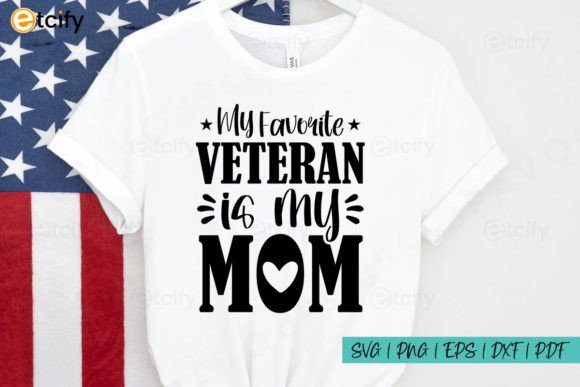
My Favorite Veteran Is My Mom SVG
A Designer’s First Look: Warm, Clear, and Purposefully Simple
When I opened My Favorite Veteran Is My Mom SVG, I didn’t see flashy embellishments or overdesigned flourishes—I saw intention. The layout is clean and centered, with balanced letter spacing and a gentle, approachable font that reads clearly at medium sizes. It’s not ornate, and that’s its strength. As an embroidery designer who’s stitched hundreds of sentimental phrases for baby blankets, boutique totes, and veteran appreciation gifts, I immediately recognized this as a design built for legibility—not just decoration. It carries quiet pride, not loud patriotism. That matters when you’re stitching something meant to be worn, gifted, or displayed in a home.
How It Translates to Real Embroidery Projects
I tested My Favorite Veteran Is My Mom SVG across three real-world scenarios: a cotton twill tote bag for a small shop launch, a soft unisex sweatshirt for a veteran support fundraiser, and a linen tea towel for a Mother’s Day holiday collection. In each case, the design held up—not because it’s technically complex, but because its simplicity works *with* embroidery, not against it.
On the tote bag, it stitched cleanly at 4.5” wide using standard fill and satin stitch combos. No thread breaks, no puckering—just crisp edges and consistent coverage. On the sweatshirt, I used medium-weight cutaway stabilizer and adjusted tension slightly; the phrase stayed sharp without looking stiff or overly dense. And on the tea towel? That’s where it truly shined. The open letterforms allowed the natural texture of the linen to show through subtly between stitches—giving the finished product a handmade warmth that customers consistently describe as “thoughtful” and “genuine.”
This isn’t a design that begs for applique or multi-layered effects. It’s a confident, single-layer machine embroidery design that performs best when treated like what it is: a heartfelt message, not a visual spectacle.
Where to Use It—and Where to Pause
My Favorite Veteran Is My Mom SVG excels on stable, medium-weight fabrics: cotton duck, midweight knits, canvas, denim, and linen blends. It’s ideal for embroidered patches (especially iron-on or sew-on versions for jackets), pillow covers, aprons, and nursery decor where clarity and emotional resonance matter more than intricate detail.
That said, proceed with care on stretchy fabric like lightweight jersey—it’ll need excellent stabilization and possibly reduced stitch density to avoid distortion. Avoid using it below 3” wide on curved surfaces like caps or baby hats unless you’ve confirmed the file scales cleanly (check your software preview before hooping). Tiny corners or tight serifs aren’t present here, but the lowercase “o” and “m” do get narrow—test those letters on scrap first if stitching on dark fabric with light thread, where contrast can blur fine details.
Also note: while the SVG format supports resizing for print-and-cut or vinyl, this design wasn’t built for ultra-fine satin-stitched outlines or dense fill areas. Don’t push it into high-detail territory—like stitching it at 1.5” on a baby onesie with 60+ colors. Keep expectations aligned with its purpose: respectful, readable, repeatable.
What It Adds to Your Finished Product—and Your Brand
For Etsy sellers and small shop owners, My Favorite Veteran Is My Mom SVG delivers instant emotional resonance. Customers searching for personalized veteran gifts often land on phrases like this—they’re not browsing for abstract art; they want meaning, delivered cleanly. When stitched well, it elevates a plain tote or sweatshirt into a personalized gift that feels intentional, not mass-produced.
I’ve watched buyers respond strongly to this kind of sincerity—especially during November (Veterans Month) and May (Mother’s Day). It bridges two meaningful identities without forcing symbolism. That builds trust. It also supports brand consistency: whether you sell handmade apparel, digital embroidery files, or craft kits, this design fits seamlessly into a thoughtful, values-aligned collection.
Practical Notes Every Embroidery Designer Should Check
- Always test on scrap fabric first—especially if pairing with a new stabilizer or thread brand.
- Review stitch density in your embroidery software. If it looks overly heavy in the preview, reduce fill density by 5–10% for breathable fabrics.
- Confirm hoop size compatibility. While the SVG itself scales freely, your converted embroidery file may have default dimensions—verify before sending to your machine.
- Inspect small details like inner counters (the enclosed space inside “o” or “e”) in both light and dark thread mockups.
- Use proper stabilizer: medium cutaway for knits, tear-away for stable wovens, and optional topping for textured fabrics like terry cloth.
- Check licensing terms before selling finished items or bundling the file in digital product listings—this is critical for craft business owners and digital embroidery file sellers.
- Compare black-and-white mockups to assess contrast and readability on both light and dark backgrounds.
Final Thought: A Quiet Design That Earns Its Place
My Favorite Veteran Is My Mom SVG won’t wow with complexity—but it doesn’t need to. In the world of Crafts and Graphics, especially for embroidery designers building real products, reliability and resonance are rarer—and more valuable—than flash. It’s a design that stitches cleanly, sells with authenticity, and honors its subject without overstatement. Whether you’re making a one-off gift or scaling production for a holiday batch, this is the kind of embroidery file that earns repeat use, not just one-time curiosity. Keep it in your working folder—not as filler, but as a trusted voice in your design assets.